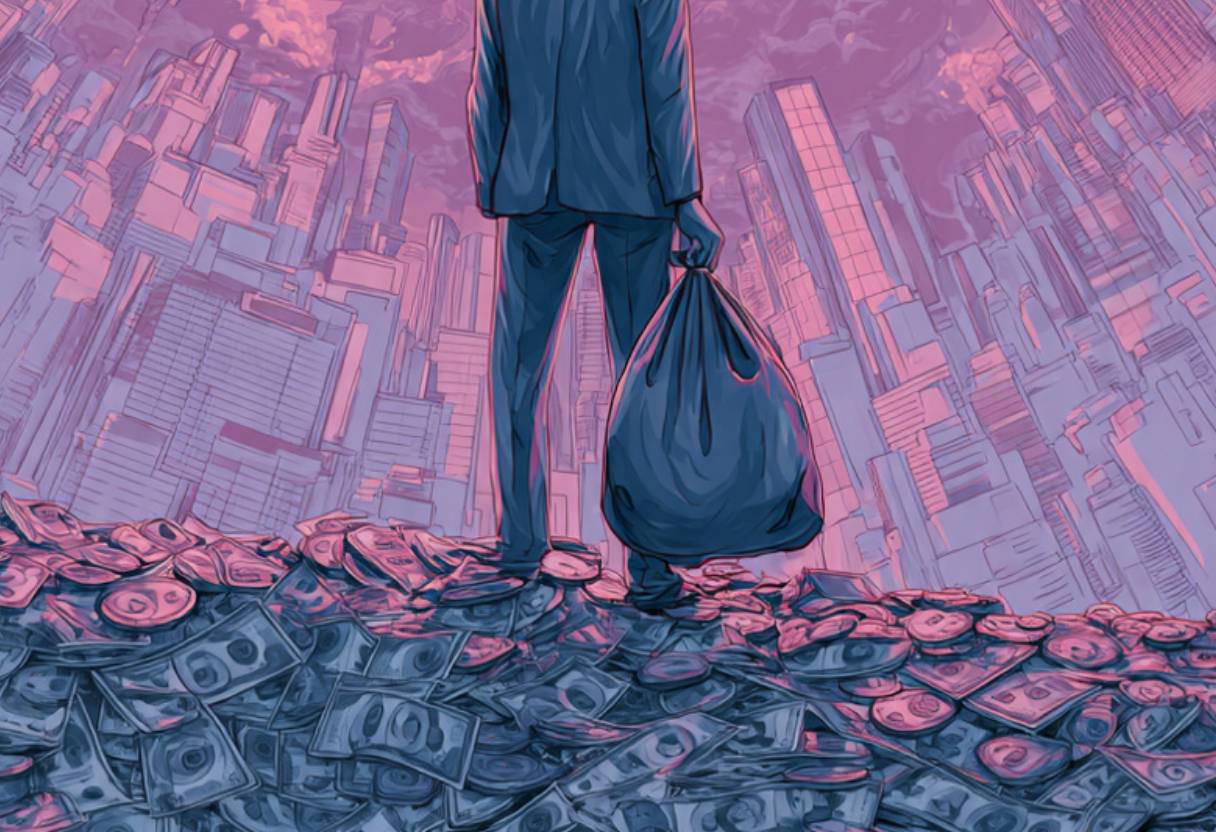
Book: The Compound Effect – Darren Hardy
There is a quiet law running in the background of your life:
What you do consistently, multiplied by time, becomes your reality.
The Compound Effect takes this law and puts it under a microscope.
It’s not about sudden luck or dramatic changes. It’s about how tiny, often boring decisions accumulate until they create a completely different life curve.
For me, this book connected strongly with my own language of “energy” and “frequency.”
It showed me that compounding doesn’t just apply to money. It applies to focus, health, mindset, relationships, and spiritual growth.
This post is about how I started to stack small actions and watch them turn into visible, exponential growth over time.
The core idea: compounding is always working
Darren Hardy’s central message is simple and ruthless:
- You are always compounding something.
- The question is not if you are compounding.
- The question is what you are compounding.
Every choice is a deposit into a trajectory:
- A little more clarity or a little more confusion
- A little more strength or a little more fatigue
- A little more aligned action or a little more stagnation
The power is in realising that no action is neutral when you zoom out far enough.
When I realized I was compounding the wrong things
Before applying this book, my pattern looked like this:
- I would be very disciplined for a few days or weeks
- Then “reward” myself by relaxing my standards
- Then feel guilty, reset, and start another short burst
On a graph, this would look like: little spikes of effort and then flat or downward stretches.
Not real compounding. Just emotional cycles.
The book forced me to ask:
- “What am I doing almost every day without thinking?”
- “If I continue this for 1–3 years, what is the inevitable outcome?”
Some answers were uncomfortable:
- Late-night scrolling stealing sleep
- Unconscious snacking draining physical energy
- Letting small opportunities slide because they felt inconvenient in the moment
The Compound Effect doesn’t judge; it just exposes the math of your behaviour.
Turning compounding into an ally
The shift was to stop seeing compounding as something “out there” and start using it as a conscious tool:
“If small negative actions can quietly destroy,
then small positive actions can quietly rebuild.”
So instead of chasing big dramatic transformations, I focused on:
- Small, repeatable, high-quality actions
- Done with consistency, not perfection
- Aimed at the future version of me I actually want to become
How I stack small actions in my daily life
1. Choosing high-leverage micro-actions
I asked myself:
“If I could only do a few small things consistently that would dramatically shift my life over time, what would they be?”
My answers were simple:
- Mind & skill:
Read, study, or review something that upgrades my thinking or skill set every day. Even 10–20 minutes. - Creation & work:
Move one meaningful project forward daily: write, build, improve, or refine something. - Body & energy:
Do at least one small thing that supports my physical energy: walking, stretching, hydration, better food choices, or rest. - Reflection & direction:
Briefly review: what did I do today that my future self will thank me for?
None of these take hours.
But repeated daily, they completely change the curve.
2. Respecting the “invisible” days
A big lesson from this book:
- The day when you see no visible progress is often the day that matters most.
Because that’s when you’re tempted to think:
- “This doesn’t work.”
- “It’s too small to matter.”
- “Skipping won’t change anything.”
This is where compounding is made or broken.
So I started to honour the invisible days:
- The workout where nothing dramatic changes
- The writing session that doesn’t yet turn into a masterpiece
- The small disciplined choice when no one is watching
I remind myself:
“This looks small, but it’s a vote for exponential growth.”
3. Tracking the curve, not the mood
Emotions fluctuate.
Data is more stable.
I keep very simple tracking:
- Checkmarks for key habits
- Brief notes on what I advanced that day
Not to obsess, but to see the pattern over weeks.
The Compound Effect is easier to believe when you have a record of the small actions you’ve actually taken.
How I take notes from The Compound Effect
My notes focus on turning the book into a personal operating guide.
1. Key principles in short phrases
I capture the core ideas in concise sentences:
- “Small smart choices + consistency + time = radical difference.”
- “You are the result of your daily decisions, not occasional heroic efforts.”
- “Choices are the steering wheel of your life.”
These lines act as quick recalibration prompts.
2. My current compounding patterns
I divide a page into two columns:
Compounding for me:
- Reading & learning
- Deep work
- Honest self-reflection
- Building better systems
Compounding against me:
- Digital distraction
- Poor sleep hygiene
- Delaying uncomfortable actions
- Operating from stress instead of calm
I don’t write this to shame myself, but to see where the energy is actually flowing.
3. My “compound stack”
Then I define 3–5 small, concrete actions to repeat:
- 10–20 minutes of focused learning
- 30–90 minutes of deep, undistracted work on something important
- One body-supporting choice (movement, food, sleep, breath)
- A brief check-in with my direction and next steps
This becomes my personal “compound stack” that I protect daily.
How compounding changed my experience of growth
Since consciously applying this framework, I’ve noticed:
- Less anxiety about “how long it will take”
- More trust in the process, because I know I am feeding the right curve daily
- A quieter, more stable confidence built from keeping promises to myself
- Clearer separation between how I feel in the moment and where I’m actually heading long-term
The biggest shift:
I no longer wait to “feel motivated.”
I focus on aligning small actions with my future and letting compounding do the heavy lifting.
Why this belongs on my Growth page
This page is here because The Compound Effect explains the engine behind so much visible change:
- Habits
- Skills
- Energy levels
- Wealth
- Emotional resilience
All of these are not single events.
They are the cumulative result of tiny, repeated choices.
If you’re reading this on my Growth site, here’s a simple starting point:
Ask yourself:
“What is one small action, so simple it looks almost insignificant,
that I’m willing to repeat for the next 6–12 months?”
Commit to that.
Let compounding show you what it can really do.