Book: Breaking the Habit of Being Yourself – Dr. Joe Dispenza
There are books you read, and there are books that read you.
Breaking the Habit of Being Yourself did the second.
I didn’t come to this book just wanting “motivation” or positive quotes. I came with a deeper question:
“How do I stop recreating the same reality, even after I ‘understand’ everything in my mind?”
Dr. Joe’s answer is direct and confronting:
You keep living the same reality because you keep being the same self.
If you don’t change your state of being (thoughts + emotions), your life can only repeat.
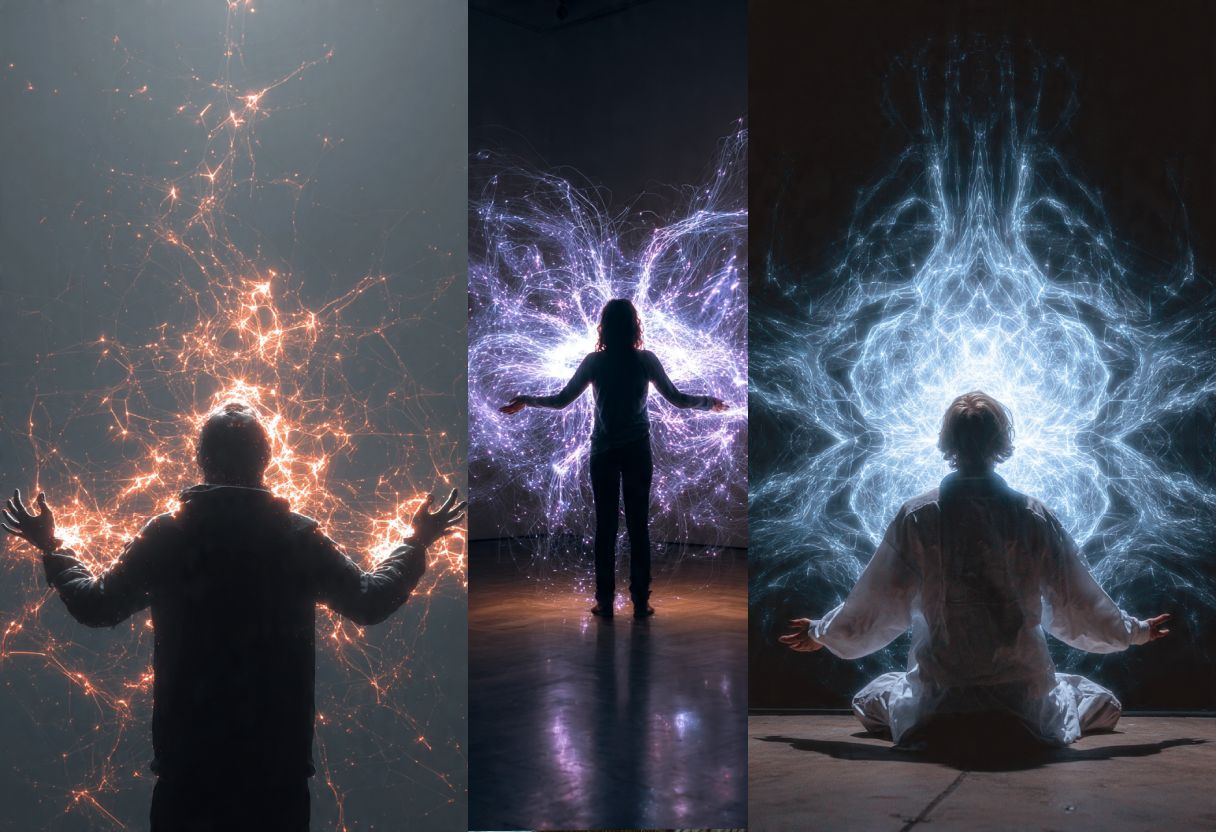
This post is my reflection on the book and how I’m actively using its ideas to “reprogram my energy field” and live more as the observer, not the old automatic self.

The core idea: your personality is your personal reality
Dr. Joe simplifies it:
- Your personality = how you think, how you feel, how you act
- Your personal reality = the life you experience every day
Same thoughts → same emotions → same actions → same reality.
Change the root (your inner state), and the external begins to shift.
For me, this changed the way I see “self-improvement.”
It’s not about doing more.
It’s about being different at the level of energy and identity.
From thinking about change to changing my energy
I used to approach growth mainly from the mind:
- Read more
- Learn more
- Think differently
But my body was still addicted to old emotional patterns: worry, anxiety, doubt, scarcity.
I could say, “I believe in abundance,” while my nervous system was still rehearsing fear.
Dr. Joe explains that the body becomes the unconscious mind.
If you’ve felt the same emotions for years, your body starts living in the past, even when your mind tries to think of a new future.
That landed hard for me.
So the real work became:
Teaching my body a new emotional signature
before the evidence appears in my physical reality.
This is what I mean by “reprogramming my energy field.”
Becoming the observer: detaching from the old self
One of the most powerful shifts from the book is the stance of the observer.
Instead of being fused with my reactions, I practice noticing:
- “Here is the old pattern of fear.”
- “Here is the familiar story of ‘it won’t work for me.’”
- “Here is my body asking for the usual stress.”
The moment I observe, I create space.
In that space, I’m no longer the old self reacting. I am the one watching the self.
From that observer state, I can ask:
- “If I were my future self, how would I respond right now?”
- “What thought matches the reality I want to create, not the one I want to leave?”
- “What emotion belongs to my future, not my past?”
This simple practice has become a quiet revolution inside me.
How I work with my energy daily
Here is how I translate the book into actual practice in my day.
1. Morning: tuning my frequency, not just my schedule
Before I dive into tasks, I align my state.
- I sit in stillness, close my eyes, and move attention away from my body, roles, and current problems.
- I imagine the future me: calm, clear, abundant, creative.
- I ask:
- “How does this version of me feel in the body?”
- “What is their natural emotion? Gratitude? Certainty? Inner peace?”
- I hold that emotion as if it’s already true, even if nothing outside has changed yet.
This is rehearsal.
I am signaling to my body:
“From now on, this feeling is home.”
2. Interrupting old emotional loops
During the day, when the old self shows up, I practice micro-interrupts:
- When I catch myself spiraling into old thoughts, I pause:
- Breathe slowly
- Relax the shoulders
- Notice the emotion without fighting it
- Then I consciously choose one new thought or emotion:
- “What if things can work in my favor?”
- “My job is to stay in alignment, not to control everything.”
The key is not perfection.
It’s awareness + a small upgrade each time.
3. Night: debrief with my energy, not just my to-do list
At night, instead of only asking “What did I get done?” I ask:
- When did I fall back into the old self today?
- When did I successfully embody the new self?
- Where did I react, and where did I consciously respond?
This turns each day into feedback, not failure.
How I take notes from this book (and integrate, not just understand)
I don’t treat books like content. I treat them like manuals for my inner system.
For Breaking the Habit of Being Yourself, my notes are structured in three layers:
1. Concepts → clean, simple lines
I write down core principles in my own wording, for example:
- “My body is addicted to familiar emotions.”
- “To change my life, I must change my state of being first.”
- “Energy before matter. Frequency before form.”
This keeps the big ideas visible and repeatable.
2. Mirrors → “Where is this true in my life?”
Beside each key idea, I write a personal mirror:
- “Where do I still live as the old self?”
- “Where do I say ‘I want change’ but emotionally rehearse the past?”
- “In what situations do I lose the observer and become the reaction?”
This is where the book becomes a conversation with my own patterns.
3. Protocols → precise experiments
Then I define simple protocols:
- “For the next 7 days, when I feel anxiety about the future, I will pause, breathe, and consciously shift to gratitude for one thing I already have.”
- “Each morning, I will spend 5–10 minutes feeling the emotion of my desired future before touching my phone.”
My notes are not just insights. They are experiments I run on myself.
What has shifted in my personal growth
Since applying Dr. Joe’s framework, I’ve noticed:
- I bounce back faster when old triggers appear. The difference is not that they vanish, but that I don’t stay there as long.
- I’m less attached to external proof. I understand that my state is the seed, and the physical result is the delayed fruit.
- I feel more like a co-creator than a victim.
Instead of asking, “Why is this happening to me?” I ask, “What part of me is this reflecting, and what energy do I choose now?” - My habits (reading, writing, building, trading, creating) are increasingly aligned with the identity I’m rehearsing, not just with external goals.
Most importantly, I feel a deeper internal coherence:
My thoughts, emotions, and actions are slowly learning to point in the same direction.
Why this matters for my Growth journey
This page is not here to say, “I’ve arrived.”
It’s here to document that:
- I am actively breaking the habit of being my old self
- I am learning to live as the observer
- I am reprogramming my energy field with intention, not by accident
If you’re reading this on my Growth site, consider it an open doorway:
You don’t have to wait for your external life to change before you feel different.
You can choose to feel, think, and act from your future now, and let reality catch up.